
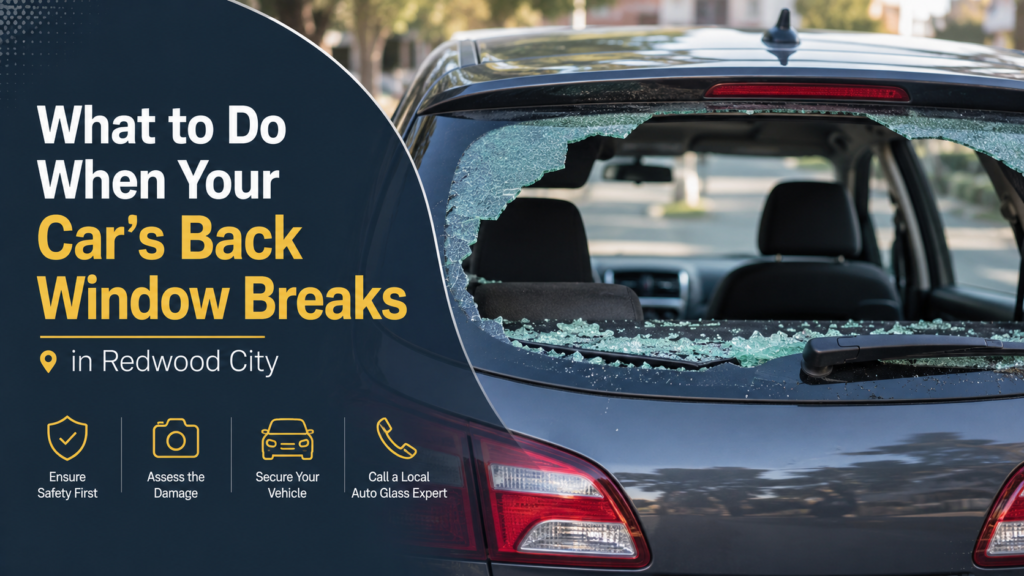
There are few automotive surprises more jarring than the sudden sound of your car’s rear window shattering. Whether it happens in a Redwood City parking lot, on Woodside Road during your commute, or while your car sits overnight in your driveway, a Broken Back Window Repair Redwood City leaves you with an immediate set of problems: broken glass everywhere, a vehicle that’s open to the elements and to theft, and a repair that can’t wait. This guide explains exactly what to do in the immediate aftermath of a broken back window in Redwood City, how rear window glass differs from your front windshield, what the replacement process involves, and how to navigate the insurance and scheduling process efficiently.
How Rear Windows Break and Why It Happens Differently Than You Expect
The rear window of most passenger vehicles is made of tempered glass a safety glass type that is fundamentally different from the laminated glass used in your front windshield. Laminated glass consists of two layers of glass bonded together with a plastic interlayer (polyvinyl butyral, or PVB). When laminated glass cracks or breaks, it tends to hold together as a unit, often spidering into a network of cracks while remaining largely in place. This is why a cracked windshield can sometimes be driven on carefully for a short period.
Tempered glass is manufactured through a heating and rapid cooling process that puts the surface of the glass in compression and the interior in tension. This gives it significantly greater resistance to impact than standard glass and when tempered glass does break, it shatters explosively into thousands of small, relatively rounded pebble-sized pieces rather than dangerous jagged shards. This shattering behavior is a deliberate safety design: the small pieces are far less likely to cause deep lacerations than the large, knife-like shards that standard glass would produce.
The downside of this design is that once a tempered rear window breaks, there is nothing left. The entire window goes from intact to a pile of small cubes essentially instantaneously. There is no partial crack to monitor or repair it’s a replacement situation from the moment of failure.
Rear windows break for a variety of reasons in the Redwood City area. Vandalism and break-ins are unfortunately common in San Mateo County, and the rear window is sometimes targeted by thieves seeking access to the trunk or back seat. Road debris rocks, tools, or other objects that fall from vehicles ahead can strike the rear glass at sufficient velocity to shatter it, particularly on El Camino Real or Highway 101. Hail, though rare on the Peninsula, can cause rear glass damage. And thermal stress the combination of rapid heating and cooling from direct sun exposure followed by fog or shade can trigger spontaneous failure in rear windows that have existing minor chips, edge chips, or installation stress, particularly in the warm-to-cool pattern that Redwood City’s marine climate can produce.
The Immediate Steps After a Rear Window Breaks
Whether the break happens while you’re driving or while the car is parked, your first priority is safety both for yourself and for anyone else near the vehicle.
If the window breaks while you are driving, keep both hands on the wheel and focus on maintaining your lane. The sudden noise and potential shower of glass pebbles can be startling, but avoid swerving or braking abruptly. Activate your hazard lights and move to the right lane calmly, then exit to a safe location such as a parking lot or wide shoulder. Once you’ve stopped safely, assess the situation before getting out of the vehicle. Thousands of small glass cubes will be on the rear seat, parcel shelf, trunk floor, and potentially on your seat if the window is near you do not brush at them with bare hands.
If the window breaks while the car is parked, approach with caution. If there are glass cubes on the ground around the vehicle, they can be slippery tempered glass pebbles on smooth pavement behave somewhat like ball bearings. If the break was caused by a break-in, do not reach into the vehicle before you’ve checked what’s inside burglars occasionally remain in the vicinity. Contact local police to report a vehicle break-in before disturbing anything.
Cleaning Up Safely After a Rear Window Break
Once you’re in a safe situation, the cleanup process begins. Tempered glass pebbles look harmless but they are still glass they can cut skin, damage upholstery, and create ongoing problems if left in carpet fibers, seat folds, or luggage areas. Thorough cleanup before getting in the car and before professional replacement takes place is important.
Wear thick gloves not thin latex or plastic gloves, but sturdy work gloves or leather gloves that provide real protection against glass fragments. Using your gloved hands, carefully collect and discard the largest concentrations of glass pebbles from seats, the rear cargo area, and the window ledge. Work carefully around weatherstripping and trim pieces, as glass can work its way into gaps.
Once the large pieces have been collected, use a vacuum to carefully clean up remaining glass dust and smaller fragments. A shop vacuum is preferable to a household vacuum for this task, as the glass can damage a household vacuum’s filter. Vacuum seats carefully, paying attention to seat folds and seams where glass can hide. Vacuum the trunk floor and cargo area.
Do not use a brush or broom to sweep the glass off surfaces in the car this can grind glass particles into fabric upholstery, scratch leather surfaces, and spread glass dust further into the interior. A vacuum is the right tool. Any glass fragments that are trapped in door seals, weatherstripping, or trim gaps should be left for the technician during replacement, as forcing them out can scratch painted surfaces or damage the seals themselves.
Check the defroster grid carefully. The rear defroster system consists of thin metal grid lines embedded in or applied to the rear glass surface and connected to the vehicle’s electrical system through terminals at the edges of the glass. When the rear window breaks, the defroster grid is gone with it any temporary covering you apply will obviously not restore defrosting capability. This is worth noting if you drive in conditions where rear window defrosting is important for visibility, as it reinforces the urgency of getting the replacement scheduled quickly.
Temporary Coverage While You Wait for Replacement
Once the immediate glass cleanup is done, the open rear window needs to be temporarily covered to protect the interior from rain, dew, wind, and any opportunistic theft. The San Mateo County Peninsula can experience fog and moisture at any time of year, and an uncovered rear window opening allows the entire interior of the car to be exposed.
Heavy-duty plastic sheeting a thick contractor-grade plastic sheet, or even a heavy-duty black trash bag is the standard temporary covering material. The goal is to create a weather-resistant cover that is taped securely to the interior window frame. Apply masking tape or painter’s tape to create a border around the inside of the window frame first this protects the paint and trim from the adhesive of the tape you’ll use to attach the plastic. Then stretch the plastic sheet across the opening and tape it firmly to the frame. The plastic should be taut enough that it won’t flap or sag while the car is parked or being driven slowly.
For the outside of the vehicle, apply a second layer of plastic on the exterior of the window opening, taping it to the exterior window frame and body panels with masking tape. This double-layer approach plastic inside and plastic outside provides better weather sealing than a single layer and reduces the chance of the covering failing in wind or rain.
A few important points about temporary coverings: they are not a permanent solution and should not be treated as one. Plastic coverings significantly impair rear visibility, making reversing and lane changes more difficult and more dangerous. You should avoid highway speeds with a plastic-covered rear window, as the covering can flap, distort, or in some cases fail at speed. The vehicle should not be left with a temporary covering for more than a few days schedule your replacement appointment as soon as possible.
Is the Rear Window Repairable, or Does It Need Full Replacement?
Unlike front windshields, which are made of laminated glass and can sometimes be repaired with resin injection if the damage is small and in the right location, tempered rear windows cannot be repaired. Because of how tempered glass shatters completely and into thousands of pieces there is no structural integrity left to repair. A broken rear window always requires full replacement.
It’s also worth noting that rear windows contain features that complicate the replacement process and distinguish it from a simple piece of glass: the embedded or applied defroster grid that must be properly reconnected to the vehicle’s electrical system; rear wiper systems that must be removed and reinstalled; third brake lights that may be integrated into the glass or mounted in the aperture; backup camera or rear-facing radar sensors that may be mounted in or near the rear glass; antenna functions embedded in the glass for AM/FM radio, GPS, or satellite radio systems.
A quality rear window replacement involves not just installing the new glass but ensuring all of these integrated systems are properly connected and functional. The defroster grid connections at the edge terminals must make good electrical contact for the defroster to work after replacement. If your vehicle has a rear wiper, the pivot, arm, and blade must be reinstalled correctly. If there are camera or sensor systems associated with the rear glass, the technician needs to address these as part of the replacement scope.
What the Rear Window Replacement Process Looks Like
Professional rear window replacement follows a careful sequence. The technician begins by removing any remaining glass fragments from the frame, the weatherstripping, and the surrounding trim. The frame is inspected for rust, damage from the break-in (if applicable), or any condition that could compromise the new installation. Bent metal around the frame edge or damaged weatherstripping needs to be addressed before the new glass goes in.
For rear windows that use a urethane adhesive bonding system similar to the front windshield the old adhesive is removed and the frame surface is prepared with primer before new adhesive is applied. The new glass is positioned, pressed into place, and the adhesive bead is verified for even contact around the perimeter. For rear windows that use a rubber gasket or channel mounting system more common in older vehicles the new glass is fitted into the gasket and the gasket is properly seated in the body flange.
After the glass is installed, the defroster terminals are reconnected and tested. The rear wiper pivot and arm are reinstalled. Any trim or finishing pieces that were removed to access the rear window frame are reinstalled. The technician should test the defroster, the rear wiper, and any other glass-associated systems before returning the vehicle to you.
In Redwood City and the broader Peninsula area, mobile rear window replacement is a common service model a technician comes to your home, workplace, or other location to perform the replacement where the vehicle is parked. This is particularly convenient for rear window replacements because the broken window has already made the vehicle interior vulnerable, and driving around town with a temporary covering creates unnecessary visibility and security risks. Mobile service allows the car to remain stationary at a secure location throughout the process.
Tint Matching for Rear Window Replacement
Many vehicles have factory-installed tinting on the rear window either as factory privacy glass (built into the glass itself during manufacturing) or as a separate window film applied after market. Matching this tint correctly during replacement is an aesthetic detail that quality technicians address specifically.
Factory privacy glass has its tinting integral to the glass it cannot be replicated exactly with aftermarket film, but quality replacement glass for most popular vehicle models is available with matching factory tint levels. If your original rear window was factory-tinted, request that the replacement glass be matched to the same tint specification rather than accepting clear glass.
If your rear window had aftermarket window film applied before it broke, the new glass will be installed clear and the film must be reapplied after replacement. California window tinting laws govern how dark rear window tinting can be rear side windows and rear windows on passenger vehicles can have any tint level in California, unlike front side windows, which must allow at least 70% light transmittance. This gives Redwood City drivers flexibility on rear tinting decisions, but make sure any film applied after replacement is installed properly to avoid bubbling, peeling, or interfering with defroster grid function.
Navigating Insurance for a Broken Back Window in Redwood City
Rear window damage whether from vandalism, theft, road debris, or weather typically falls under comprehensive coverage in a standard California auto insurance policy, not collision coverage. Comprehensive coverage addresses damage from events other than collisions, including theft, vandalism, weather events, and falling objects. If you have comprehensive coverage and the damage was not caused by a collision with another vehicle or object you drove into, your comprehensive policy should cover the replacement.
California does not mandate zero-deductible glass coverage, so your comprehensive deductible applies to the replacement unless you have a specific glass rider or separate glass coverage endorsement on your policy. For some drivers, particularly those with high comprehensive deductibles, it may make sense to pay for the replacement out of pocket to avoid a claim. For others, particularly if the rear window replacement cost exceeds the deductible, filing is straightforward.
If the rear window was broken in a break-in, file a police report first. The report establishes the event for insurance purposes and may be required by your insurer when processing the claim. Keep the report number accessible when you contact your insurer. A reputable auto glass service can work directly with your insurance company handling the claim documentation, adjuster coordination, and paperwork so you don’t have to navigate the process yourself.
Frequently Asked Questions About Broken Back Window Repair in Redwood City
Can a broken rear window be repaired instead of replaced? No. Tempered glass the type used in rear windows shatters completely when it breaks. There is no intact glass structure remaining to repair. Rear window damage always requires full replacement of the glass unit.
How long does a rear window replacement take in Redwood City? Most rear window replacements take 60 to 90 minutes for the physical installation. Vehicles with defroster reconnection, rear wipers, and integrated sensors may take somewhat longer. Mobile service in Redwood City typically allows same-day or next-day appointments depending on parts availability for your specific vehicle make and model.
What if I can’t get my car to a shop because the window is broken? Mobile auto glass services are specifically designed for this situation. A mobile technician comes to wherever your vehicle is parked your home, your workplace, or another location in Redwood City and performs the replacement on site. You don’t need to drive the car anywhere.
Will the rear defroster still work after replacement? Yes, when the replacement is done correctly. The defroster grid connections at the terminals on the side of the glass must be properly reconnected during installation, and the technician should test the defroster before returning the vehicle to you. If the defroster does not work after replacement, contact the installer immediately it is typically a simple connection issue that can be resolved quickly.
How should I protect my car overnight if I can’t get a replacement right away? Apply a thorough temporary covering inside and outside the window opening using heavy-duty plastic and masking tape. Park in a garage if available, or a covered parking structure. Avoid leaving valuables visible in the vehicle. If the break was a theft attempt, consider temporarily parking in a more secure or monitored location until the glass is replaced. A temporary covering is not a permanent or fully secure solution schedule the replacement as quickly as possible.