Drive-thru Systems in Saudi Arabia: The 2026 Efficiency Guide
The car lane is now a front-line sales channel. In busy Saudi cities, a slow or confusing drive-thru sends drivers straight to a competitor. That is why well-designed Drive-thru Systems in Saudi Arabia have become one of the highest-return technology upgrades a restaurant, pharmacy, or bank branch can make in 2026.
This guide breaks down how modern drive-thru technology works, the components that speed up every order, and how to pick a setup that keeps cars moving and revenue climbing.
Why Drive-thru Speed Decides Your Revenue
Every extra second in the lane costs money. When a queue backs up onto the street, drivers who see it simply keep going. Faster lanes mean more cars served per hour, higher average sales, and a stronger brand reputation for convenience.
Industry data on quick-service operators consistently shows that lane speed is one of the strongest predictors of profitability. Shave a handful of seconds off each order and the yearly gain across thousands of cars is substantial.
The Cost of a Slow Lane
- Drive-offs: customers who see the line and leave.
- Order errors: rushed staff mishear requests, causing rework.
- Street congestion: spillover that annoys neighbours and authorities.
- Lost loyalty: one bad wait can end a repeat habit.
How Modern Drive-thru Systems Work
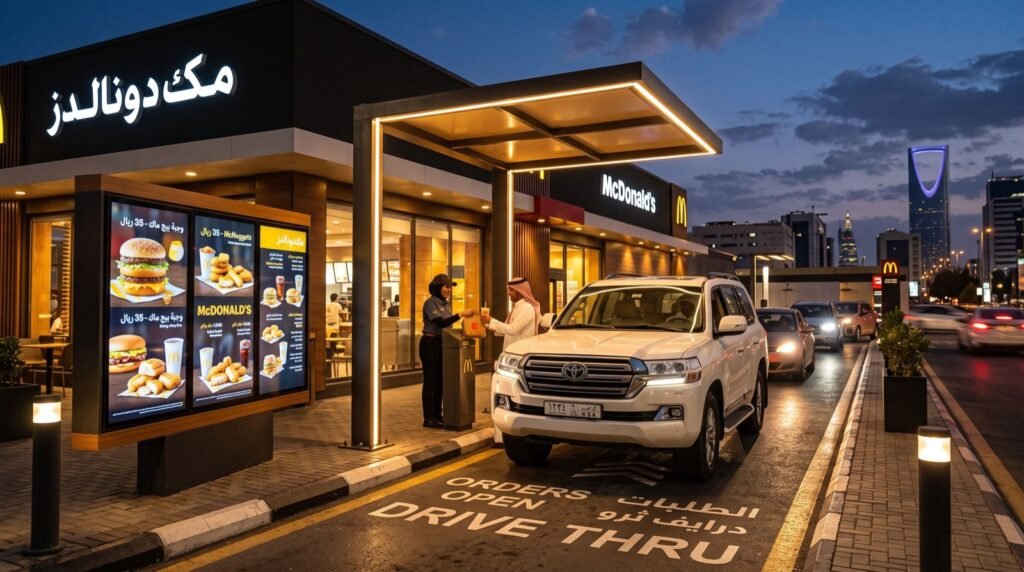
A complete drive-thru setup is a chain of connected components, each removing friction from the order. Reliable Drive-thru Systems in Saudi Arabia typically combine the following:
- Digital menu boards: bright, weatherproof screens that update prices and offers instantly.
- Clear-audio intercoms: noise-cancelling headsets and speakers so orders are heard correctly the first time.
- Order confirmation displays: screens that show drivers exactly what they ordered.
- Lane timers: sensors that measure each stage and flag slow points.
- POS integration: the order flows straight to the kitchen or counter.
The magic is in the integration. When the menu board, intercom, timer, and point of sale all talk to each other, staff focus on service instead of fighting disconnected tools.
Component Comparison
| Component | Primary Benefit | Impact on Speed |
|---|---|---|
| Digital menu board | Faster ordering decisions | Medium |
| Noise-cancelling headset | Fewer order errors | High |
| Order confirmation screen | Builds driver trust | Medium |
| Lane timer analytics | Pinpoints bottlenecks | High |
| POS integration | Removes manual re-entry | High |
Beyond the Lane: Access and Security Technology
Drive-thru efficiency often connects to wider site technology. Staff access, cash rooms, and back-office areas need secure, fast entry that never slows the team down. This is where biometric access control earns its place.
A reliable Biometric Finger Print Scanner lets authorised staff move quickly between secure zones without fumbling for cards or codes. For high-turnover sites, that speed and accountability protect both cash and inventory while keeping shift changes smooth.
Why Biometrics Suit Fast-paced Sites
- No shared cards: access cannot be lent, lost, or copied.
- Instant audit trail: you know exactly who entered and when.
- Fast throughput: a fingerprint is quicker than typing a PIN.
Designing a Lane That Flows in the Kingdom’s Climate
Saudi weather is tough on outdoor hardware. High summer temperatures, dust, and glare all affect how a drive-thru performs, so the design choices matter as much as the technology itself.
From hands-on installations, a few principles consistently separate a lane that thrives from one that fails:
- High-brightness screens: menu boards must stay readable under direct sun, so choose sunlight-rated displays.
- Dust-resistant hardware: sealed speakers and intercoms survive longer in dusty conditions.
- Shaded order points: a canopy protects both equipment and the driver’s comfort.
- Backup power: a small UPS keeps the lane running through brief outages.
Layout Tips That Boost Throughput
- Separate order and pickup: a two-window design lets one car order while another collects.
- Add a pull-forward bay: park complex orders aside so they never block the lane.
- Position the menu early: give drivers time to decide before they reach the speaker.
These small design decisions compound. A lane that keeps cars moving through peak Friday evenings will out-earn a competitor whose queue stalls at the first hot afternoon.
How Do You Choose the Right Drive-thru Setup?
Start by mapping your current lane and its slowest stage. If the bottleneck is the order point, prioritise audio clarity and menu screens. If it is the handoff window, focus on POS integration and lane timing.
Then weigh scalability. A growing chain needs a system that expands across branches with consistent hardware and central reporting. Local support is decisive too; when a screen or headset fails at peak hour, you need a technician who responds fast.
Ask any vendor for a live reference. Suppliers proud of their work will point you to existing clients who behave like quality service providers and can speak candidly about reliability and support.
Frequently Asked Questions
How much can a drive-thru system reduce order time?
Results vary by site, but well-integrated systems commonly cut several seconds from each order through clearer audio, confirmation screens, and faster order routing. Across thousands of daily cars, that adds up to meaningful extra capacity.
Do drive-thru systems work for pharmacies and banks?
Yes. Any business serving customers in their car benefits. Pharmacies use lanes for prescription pickup, and banks use them for quick cash transactions, both relying on the same core order and timing technology.
Can I add biometric access to my existing site?
In most cases, yes. A fingerprint scanner can be fitted to staff doors, cash rooms, and back offices without replacing your whole security setup. It integrates with common access-control panels used across the Kingdom.
Is local support important for drive-thru technology?
It is critical. Drive-thru hardware runs in tough outdoor conditions, so on-site support and quick part replacement keep your lane open. Always confirm response times and warranty terms before buying.
Final Word
In 2026, the drive-thru lane is a profit engine, not an afterthought. The right Drive-thru Systems in Saudi Arabia trim seconds from every order, reduce errors, and keep cars flowing, while smart access technology protects the site behind the scenes. For a wider view of quality and safety benchmarks, resources from the International Organization for Standardization are a solid reference. Map your bottleneck, choose an integrated setup, and let a faster lane drive your growth this year.